
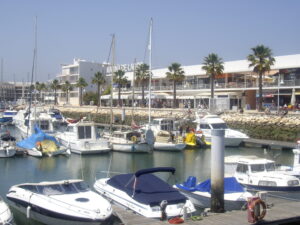
Marina
Lagos boasts a wonderful marina, separated from the main town by the river spanned by a pedestrian bridge that opens regularly to let sailing vessels of high masts pass through. The Marina is a great place to walk or to stop at one of the many bars and restaurants and enjoy the ambience as the boats and the excursions come and go. Boat trips of just about any imagination can be booked here including dolphin spotting trips.
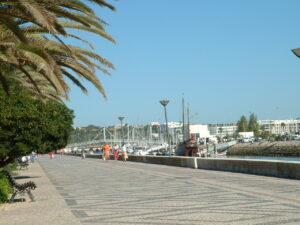
Avenida
The Avenida is a wide pedestrian walkway with the town on one side and the river on the other. Across the river is the Marina, the fishing area and the 5km beach Meia Pria.
The Avenida is a great place to walk, jog or cycle and enjoy the views down the river. During the day, market stalls are dotted along the Avenida displaying local wares.
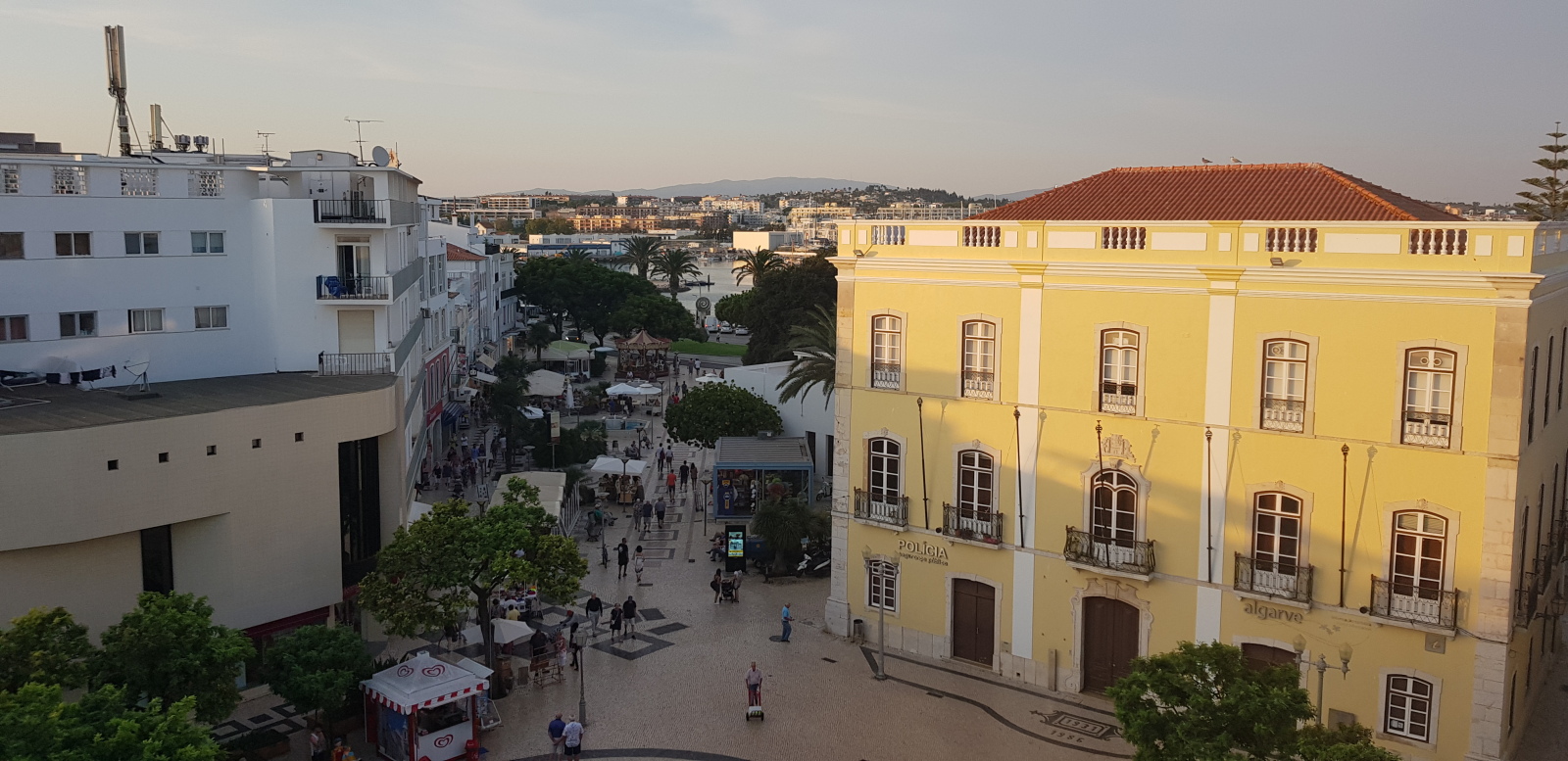
The Town
The Town is a fascinating place throughout the day featuring many points of interest including churches, the fort, and a museum.
By day, there are many shops to explore, including craft shops, galleries and cork centres. There are many patisserie shops and a bakery. Set time aside to visit the fish market featuring local catch.
The old town comes alive at night with its many bars, restaurants and street acts creating a vibrant but relaxed atmosphere.
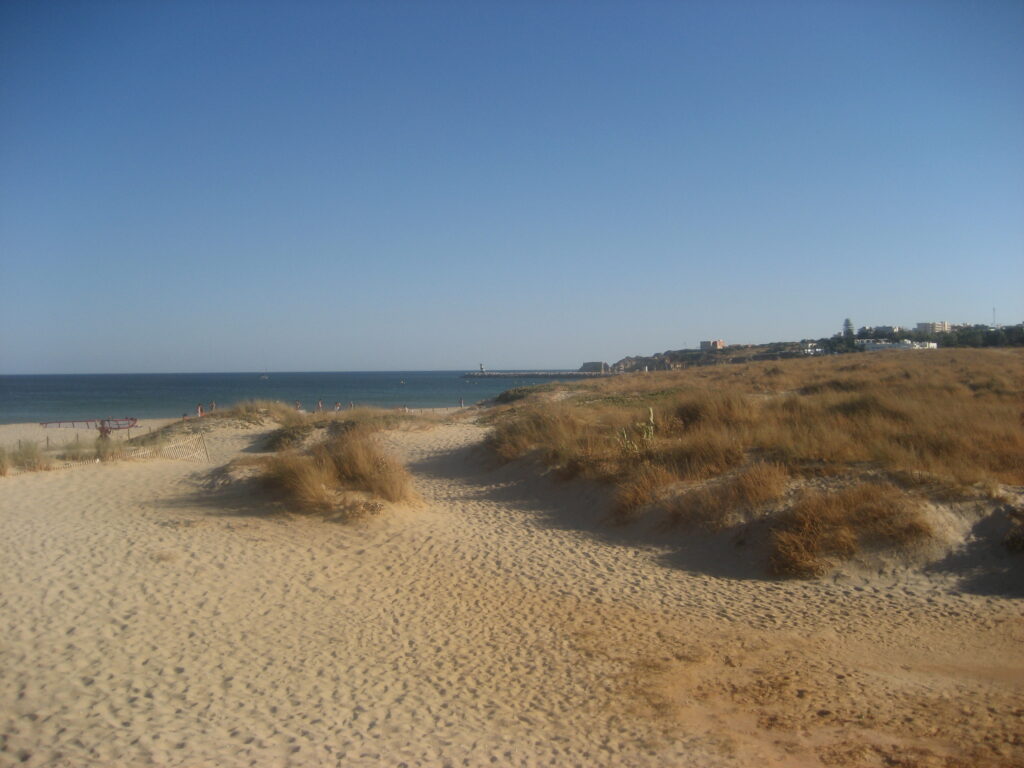
Meia Praia – close to Marina
Meia Praia is one of the longest beaches in the Algarve and the biggest beach in Lagos. It stretches for about 4.5k, great for long beach walks. Due to its size, you can always find an area with space. From the beach, you have a great view of the town. It is perfect for peace, quiet and cleanliness. Never overcrowded, it is an excellent choice for long beach walks and running. Close to the town of Lagos, this is a favourite beach for many locals and tourists all year round.
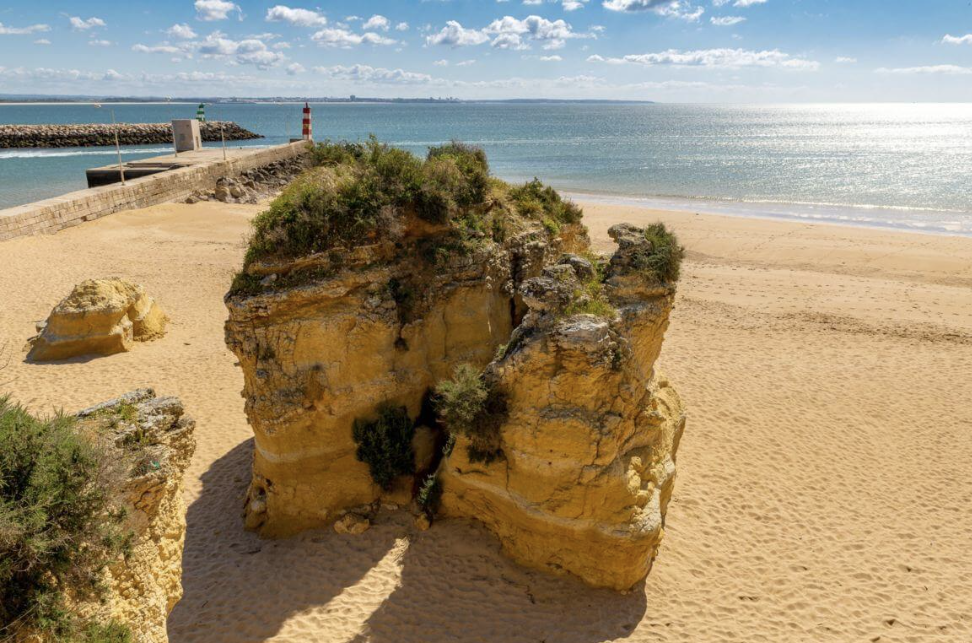
Praia Da Batata – close to Town Centre
Praia da Batata is the closest beach to the town of Lagos. It is relatively small, compared to Meia Praia or Dona Ana. Due to the proximity to the town, the beach is usually quite crowded. There are also several watersports here, like kayaking.
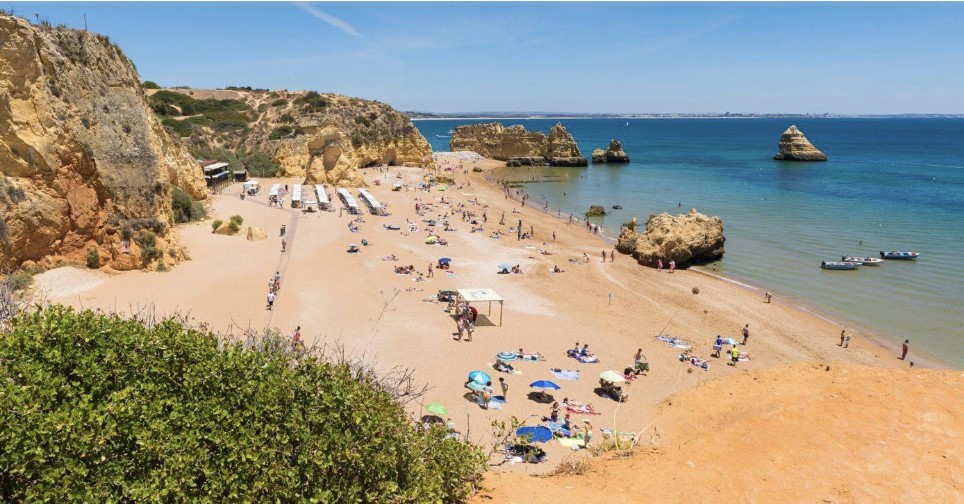
Praia da Dona Ana – Between Lagos and Ponta da Piedade
Praia da Dona Ana is not a large beach at about 160 metres long, making the beach not that big. However, it is one of the most picturesque and photographed beaches on the Algarve. The beach is located between the town of Lagos and Ponta da Piedade. The beach is flanked by Praia do Camilo and Praia do Pinhão.
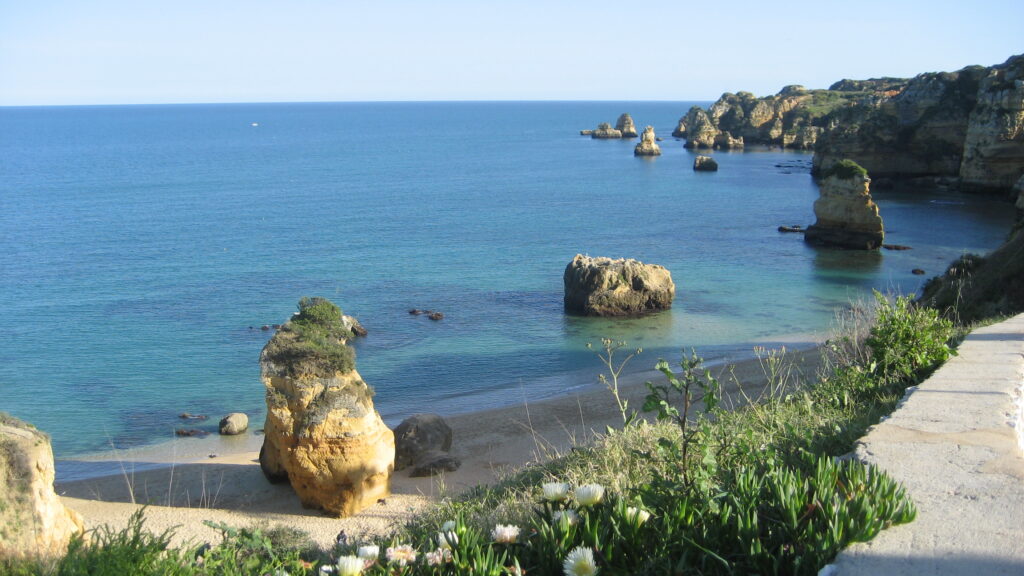
Praia Do Camilo – Other side of town
Praia do Camilo is a stunning beach. and is located between Praia da Dona Ana and Ponta da Piedade and is listed as one of the best things to do in Lagos on Trip Advisor. The rock formations are beautiful and some caves and tunnels lead to three or four smaller beach areas.
It is a small beach and can get very busy in the summer. To get to Praia do Camilo, you must descend long wooden stairs of about 200 steps. If the steps put you off then it is still worth a visit as from the top the views of the rock formations are stunning, especially at sunset.
Fort
The Fort of Ponta da Bandeira was built in the 17th century to protect the region from pirates and now serves as a museum. One of the highlights is a small chapel lined with traditional Portuguese tiles. Normally, you can visit the fort and also climb its roof for a great view. Significant restoration work has been carried out over the years and the fort is considered to be one of the best-preserved 17th-century fortifications in the Algarve.
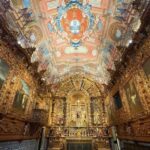
Lagos Museum
Lagos has several small museums, probably the best is the town museum, Museu de Lagos. It’s adjacent to the Church of Santo Antonio, which can only be visited with a museum ticket. This lavishly decorated chapel (see photo) is awe-inspiring and one of the best landmarks of Lagos. The museum has a mix of exhibitions of the town’s history, regional artefacts, religious art.
You only need 15-20 minutes here, the entrance costs just a few euros, and it’s worth it.
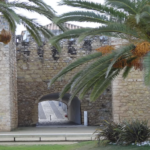
Town Walls
The Romans were the first to build town walls around Lagos and these were reinforced during the Arab and later Christian occupations of the town. The substantial city walls which still stand today around the old historic centre of Lagos date from the 16th century, when raids by Barbary pirates were common and the threat from Spain was very real.
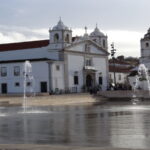
St Anthonys Church
Next to the Museum of Lagos, the Igreja de Santo António is one of the town´s most remarkable buildings. The building was probably erected during the reign of João V, but was reconstructed after the 1755 earthquake by the commander of Lagos´ Infantry Regiment. The little Igreja de Santo António, bursting with 18th- and 19th-century gilded, carved wood, is a stupendous baroque extravaganza. Beaming cherubs and ripening grapes are much in evidence. The dome and azulejo panels were installed during repairs after the 1755 earthquake
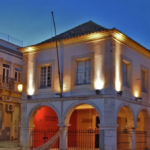
Slave Market
Lagos´ slave market, built in 1444, was Europe’s first slave market. It was here during the 15th century where the first slaves, captured and transported from Africa, were sold. As the major sponsor of these expeditions, Prince Henry the Navigator (whose statue appears on the plaza) received one-fifth of the selling price of the slaves. The building now holds a museum with ancient findings.